

|
|||||
 PS Classics has just released the debut solo CD of Jessica Molaskey,
Pentimento, which is perhaps the strongest and most enjoyable solo
album of the year. The CD features a collection of 16 depression era songs
and two songs written by Jessica and her husband, John Pizzarelli (who
also plays guitar and duets with Jessica on "We're In the Money"), which
combine into a remarkably topical album given the current situation on
Wall Street. The inclusion of many an obscure verse ads to one's
comprehension that these songs were truly used to get people through
difficult times, usually with tongue firmly in cheek and a sense of irony
resolutely in place (although the lack of inclusion of the verse to "I'm
Always Chasing Rainbows," with its oh-so-appropriate lyrics is a mystery). PS Classics has just released the debut solo CD of Jessica Molaskey,
Pentimento, which is perhaps the strongest and most enjoyable solo
album of the year. The CD features a collection of 16 depression era songs
and two songs written by Jessica and her husband, John Pizzarelli (who
also plays guitar and duets with Jessica on "We're In the Money"), which
combine into a remarkably topical album given the current situation on
Wall Street. The inclusion of many an obscure verse ads to one's
comprehension that these songs were truly used to get people through
difficult times, usually with tongue firmly in cheek and a sense of irony
resolutely in place (although the lack of inclusion of the verse to "I'm
Always Chasing Rainbows," with its oh-so-appropriate lyrics is a mystery).
Jessica has a winsome voice that caresses each note and lyric. Those used to hearing her powerful belt (featured on Jason Robert Brown's Songs for a New World and Parade) will not recognize the laid-back manner she displays on this album to remarkable effect. Molaskey is backed by a killer combo that, in addition to her husband, includes Bucky and Martin Pizzarelli, Larry Goldings, and Ken Peplowski; all of whom manage to impart a unique feel to each song, yet remain true to a unified mood throughout the album. This is an incredible CD and sure to be on everybody's 'Best of 2002' list.
Day's voice is also extraordinarily refreshing and unique, possessing a 'baby-doll' quality similar to Blossom Dearie and Bernadette Peters, but sans the hints of sly, twisted understanding that underlies those performers. And therein lies one of the drawbacks to the album; while intellectually Day is able to grasp the complexities and the darker side of the songs, her voice, as refreshing and youthful as a fine spring day, works counter to said elements. Thus, "A Time For Love" and "Something Cool" lack the final payoff that a more world-weary voice would bring. This dichotomy works wonderfully, however, with "What Are You Doing The Rest Of Your Life?", in which the song's minor melody and Day's optimistic sound make for a delightful juxtaposition. Even though the two aforementioned songs lack full payoff, they are well thought out and executed, as is the majority of the album, which contains a great mix of old standards and newer material. Only one track provides a major disappointment and in this listener provoked such a visceral reaction that I had to take a break from the album. In lesser albums, a flawed track is easily overlooked and ignored, but Day has woven such a fine and supple web with State Of Bliss that this one track was enough to unravel the warp and woof of the entire CD. Oddly enough, the track contained two songs that should work well together, at least musically; Sondheim's "Take Me To The World" and "Anyone Can Whistle." For some odd reason, the two songs do not gel, largely due to the arrangement. Day is simply stunning on "Take Me To The World," which perfectly showcases her voice and sensibilities. However, the transition into "Whistle" is jarring; the effect given is that she went off-key in the process. The key in which she ends up does not fit her voice and provides the only spot on the album where she becomes shrill and belty. In addition, the key also forces her to sing an alternate melody line upon her return to "Take Me To The World," one that works against the song and our expectations. While I urge you to buy the album, I urge you with equal fervor to skip the track (at least the first time you listen to it) to more fully enter Day's State of Bliss.
Turner is extremely adept at getting under the skin of a song and bringing out every nuance of a lyric. She is also a highly theatrical singer of the old 'belt' variety, which is, at times, a refreshing change. The songs are nicely balanced between touching and/or intense ballads ("Take Me To The World," "Not A Day Goes By," "No More/Moments In The Woods" and "Send in the Clowns") to lighter comic fare ("Pretty Little Picture," "Can That Boy Fox Trot") to tour-de-force knock 'em dead numbers ("I'm Still Here" and an incredible "Rose's Turn" that hopefully will lead some smart director or producer to cast her in a production of Gypsy ASAP).
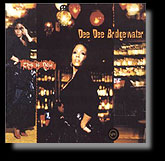
Sounding more than a little like jazz great Dianne Reeves, Bridgewater delivers most of the songs in a slow, sultry manner. Her "Lost In The Stars" is an absolute delight, and she shines on such classics as "My Ship" and "Speak Low." While "Alabama Song" breaks from that sultry groove a bit too much for my taste, the bossa nova flavored "Bilbao Song" is infectious and "The Saga of Jenny," with its playful mix of styles and tempos, gives great attitude.
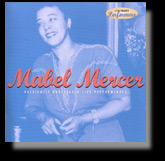
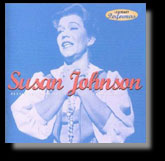
Considered to be the patron saint of cabaret, Mabel Mercer is essentially a 'singer's singer' whose attention to lyrics and storytelling is legendary. Legendary Performers: Mabel Mercer is a delightful collection of twenty-three numbers recorded live during performances in the '60s. Fifteen of the songs are showtunes, and are a delightful mix of the known (a playfully wry "I Feel Pretty," a heartfelt "Once Upon A Time," and a tender "More I Cannot Wish You") and the more obscure (a gleeful "Days Gone By" from She Loves Me, an incredibly well-acted "Mira" from Carnival! and a joyful "Merely Marvelous" from Redhead - a number that should be rediscovered). The visual image she conjures with "Lazy Afternoon" provides a virtual master class in storytelling technique, and her rendition of Cole Porter's "Ev'ry Time We Say Goodbye" is an exercise in subtle heartbreak. While some of the songs suffer from source material problems, and others contain the occasional vocal bobble, Mercer's impeccable phrasing and interpretive abilities shine through. Susan Johnson is one of the most fondly remembered Broadway performer of the '50s; much more so than her limited output of albums would suggest. Her voice, an incredibly lush mezzo that envelopes the listener like a velvet wrap, was adept at handling comic numbers and ballads equally. Best known for originating the sarcastic best friend, Cleo, in The Most Happy Fella, Johnson's Broadway career was sidelined due to a combination of a horrible traffic accident in 1963 and her focus on family after getting married in 1964. Legendary Performers: Susan Johnson contains 26 songs grouped as medleys by songwriters Irving Berlin, Frank Loesser, Cole Porter, Johnny Burke and Richard Rodgers. This is definitely a must-have album for theater lovers. To hear Johnson's voice caress every note and wring every emotion out of Berlin's "Remember" and Burke's "But Beautiful" is worth the price of the album alone. To hear the sheer reckless joy she brings to Loesser's "If I Were A Bell" or the knowingly sardonic manner she imparts on Rodgers' "I Wish I Were In Love Again" is just further icing on an incredible cake.
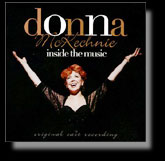
For the most part, the show, which incorporated copious amounts of dance amidst the personal storytelling, transfers well onto disc. The first twelve minutes, unfortunately, belay that due to two medleys that become stupefying on disc, containing, as they do, snippets of over a dozen songs that fail to gel into a unified whole or sustain an emotional arc. The show comes to vibrant life once McKechnie starts talking about her life and singing full songs that serve to expand upon her life stories. Her wistful ode to Astaire is delightfully punctuated by a tale of her meeting of her idol. A song series illustrating a painful relationship hits the right notes of pathos ("Lies of Handsome Men," "Guess Who I Saw Today?" and "Where Do You Start") before launching into a celebratory story of freedom from said handsome man, which culminates into a bravura medley that includes "Everybody Says Don't" and "I Am Easily Assimilated." While a few of the songs are no longer in her range and are a bit painful to hear (specifically "Turkey Lurkey Time" from Promises Promises), for the most part she sounds grand. Two obscure songs, Kleban's "Broadway Boogie Woogie Blues" and "Inside The Music" (which was replaced by the much more suitable "The Music And The Mirror" for A Chorus Line) will delight theater fans.
|
|||||
|
|
|||||
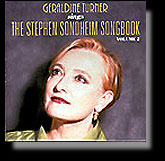 Australian performer Geraldine Turner has an association with the music
of Stephen Sondheim that dates back to 1973, when she performed Petra in
the Australian premier of A Little Night Music. Down under, she has
also been featured in Sweeney Todd (Mrs. Lovett), Into The
Woods (The Baker's Wife), Company (Joanne), and revisited A
Little Night Music as Desiree. In 1986, she was one of the first
performers to devote an entire album to Sondheim songs, which has recently
been followed up with Geraldine Turner Sings The Stephen Sondheim
Songbook - Volume 2.
Australian performer Geraldine Turner has an association with the music
of Stephen Sondheim that dates back to 1973, when she performed Petra in
the Australian premier of A Little Night Music. Down under, she has
also been featured in Sweeney Todd (Mrs. Lovett), Into The
Woods (The Baker's Wife), Company (Joanne), and revisited A
Little Night Music as Desiree. In 1986, she was one of the first
performers to devote an entire album to Sondheim songs, which has recently
been followed up with Geraldine Turner Sings The Stephen Sondheim
Songbook - Volume 2.
 A reader in German brought my attention to an album entitled Tire
Tracks, by Kenneth Posey, an American performer who is
currently starring in Jekyll & Hyde in Germany. Singing two songs
each from Whistle Down The Wind, Aida, and The Rocky Horror Show
(none, oddly enough, from Jekyll & Hyde), Posey has a strong rock/pop
tenor that is surprisingly expressive. He is joined by Leah delos Santos
("Elaborate Lies" from Aida, "A Kiss Is A Terrible Thing To Waste"
and "Tire Tracks and Broken Hearts" from Whistle Down The Wind;
that latter of which I still have a hard time listening to and not
inserting the original 'capped teeth and Caesar salad' lyrics into) and
Sascha Th. G. Krebs ("Like Father Like Son" from Aida). As the
album is only six songs in length, it is hard to recommend tracking it
down at Footlight Records, especially since it is an import. However,
there is no denying that Posey is an exciting singer and a performer to be
on the look out for. The album does contain a few multimedia extras, chief
of which is a video of Posey performing "Come Rain or Come Shine" that
demonstrates his faculty with a kinder, gentler ballad.
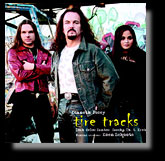
A reader in German brought my attention to an album entitled Tire
Tracks, by Kenneth Posey, an American performer who is
currently starring in Jekyll & Hyde in Germany. Singing two songs
each from Whistle Down The Wind, Aida, and The Rocky Horror Show
(none, oddly enough, from Jekyll & Hyde), Posey has a strong rock/pop
tenor that is surprisingly expressive. He is joined by Leah delos Santos
("Elaborate Lies" from Aida, "A Kiss Is A Terrible Thing To Waste"
and "Tire Tracks and Broken Hearts" from Whistle Down The Wind;
that latter of which I still have a hard time listening to and not
inserting the original 'capped teeth and Caesar salad' lyrics into) and
Sascha Th. G. Krebs ("Like Father Like Son" from Aida). As the
album is only six songs in length, it is hard to recommend tracking it
down at Footlight Records, especially since it is an import. However,
there is no denying that Posey is an exciting singer and a performer to be
on the look out for. The album does contain a few multimedia extras, chief
of which is a video of Posey performing "Come Rain or Come Shine" that
demonstrates his faculty with a kinder, gentler ballad.